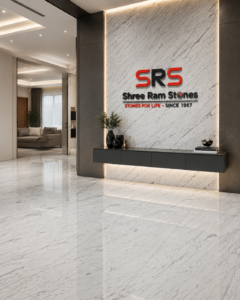

Religious buildings require materials that create beauty, dignity, and lasting appeal. Therefore, marble for mosques and churches remains a popular architectural choice.
Natural marble offers unique patterns, elegant colors, and a timeless surface. Moreover, it works well with both traditional and modern religious architecture.
Why Choose Marble for Religious Buildings?
Marble creates a refined appearance across large architectural spaces. Its natural veining also gives every installation a distinctive character.
Furthermore, marble works well for floors, walls, columns, entrances, stairs, and decorative features. Architects can combine different marble colors to create balanced visual designs.
For premium interiors, consider Italian Marble from Shree Ram Stones. The collection includes several colors and patterns for luxury architectural projects.
Marble Flooring for Mosques and Churches
Flooring is one of the most important design elements in religious buildings. It must support frequent movement while maintaining an elegant appearance.
White marble creates a bright and spacious atmosphere. In contrast, darker marble can create borders, patterns, and visual separation.
For example, Italian White Marble can complement large prayer halls and peaceful interior spaces.
Likewise, designers can use Italian Statuario Marble for premium focal areas. Its white background and natural grey veining create a sophisticated appearance.
Choosing Marble Colors and Patterns
Color selection should match the building’s architecture and lighting. White and cream marble can make large interiors feel brighter.
Meanwhile, beige marble can provide warmth and a traditional appearance. Italian Botticino Marble offers a warm beige tone with subtle natural veining.
Grey marble can also create a contemporary architectural character. Therefore, it can work well in modern churches, mosques, halls, and entrance areas.
Marble for Columns, Walls, and Decorative Features
Marble is not limited to flooring. Architects can use it on columns, wall panels, entrance features, and decorative sections.
Large marble panels can create strong visual focal points. Additionally, carefully selected veins can enhance symmetry and continuity.
For this reason, slab selection should happen before installation. Designers should review the complete pattern and plan the layout carefully.
Surface Finish and Maintenance
The right surface finish depends on the application. Polished marble provides a reflective appearance and highlights natural colors.
Honed finishes create a softer, less reflective appearance. However, flooring requirements should always consider slip resistance, traffic, cleaning, and maintenance.
Regular cleaning also helps preserve the natural appearance of marble. Therefore, project teams should follow suitable stone-care practices.
Marble Selection for Large Religious Projects
Large mosques and churches require consistent material selection. Architects should consider slab size, thickness, color variation, availability, and installation requirements.
Furthermore, suppliers should provide material suitable for the project’s quantity and design specifications.
Shree Ram Stones supplies marble, granite, onyx, quartz, and other natural stone products. The company serves architects, builders, designers, and project buyers from Kishangarh, Rajasthan.
Design Planning Before Marble Installation
Before ordering marble, prepare a detailed layout. Mark flooring zones, wall sections, columns, stairs, and decorative areas.
Next, calculate the required quantity and allow suitable material for cutting and matching. Also, review slab patterns before final installation.
This approach helps reduce wastage and improves pattern continuity across large surfaces.
Conclusion
Marble for mosques and churches can combine architectural beauty with a timeless natural appearance. The right marble depends on design, application, traffic, finish, and maintenance requirements.
By selecting suitable colors, patterns, sizes, and finishes, architects can create distinctive religious spaces.
Shree Ram Stones offers premium marble and natural stone solutions for residential, commercial, and architectural projects.
Contact Shree Ram Stones
Shree Ram Stone and Company
Makrana Road, RIICO Industrial Area, Kishangarh, Khatoli, Rajasthan 305801
📞 +91 92521 01111
📞 +91 92570 46201
📧 ceo@shreeramexpo.in
📧 shreeramexpo@gmail.com
Website: Shree Ram Stones
FAQ
What type of marble is suitable for mosques?
White, cream, and selected grey marbles can suit mosque interiors. The final choice depends on design and application.
Can marble be used for church flooring?
Yes. Marble can be used for church flooring, entrances, aisles, walls, columns, and decorative areas.
Is Italian marble suitable for religious buildings?
Italian marble can suit premium religious architecture. Its natural patterns provide an elegant and distinctive appearance.
Which marble color is best for large religious interiors?
White, beige, and light grey marble can create bright and spacious interiors. Designers should match the color with lighting and architecture.
How should marble be selected for large projects?
Consider color consistency, slab size, thickness, pattern, finish, quantity, installation, and maintenance requirements.