
Your building’s exterior creates its first impression. Therefore, choosing the right natural stone can transform an ordinary structure into an architectural landmark.
Natural stone offers more than visual appeal. It provides distinctive textures, rich colours, and a connection with nature. Moreover, the right material can perform well for years when designers specify and install it correctly.
However, not every marble or granite suits every exterior application. Sunlight, rain, pollution, moisture, temperature changes, and installation methods affect long-term performance.
Whether you are constructing a luxury villa, residential bungalow, commercial complex, hotel, or institutional building, your stone selection deserves careful attention.
At Shree Ram Stones, we help homeowners, architects, builders, and project developers explore premium natural stone options from Kishangarh, Rajasthan.
This guide explains how to choose natural stone for exterior elevation. It also covers suitable materials, design ideas, technical considerations, maintenance, and purchasing decisions.
Why Natural Stone for Exterior Elevation Is a Premium Architectural Choice
An exterior elevation represents the architectural identity of a building. Consequently, material selection influences its appearance, character, and long-term maintenance requirements.
Natural stone remains a popular choice because every slab carries unique patterns. Unlike repetitive manufactured finishes, natural stone creates individual visual characteristics.
1. Timeless Architectural Appearance
Natural stone creates a sophisticated appearance across traditional and contemporary architectural styles.
For example, white stone creates a clean and elegant exterior. Meanwhile, dark granite adds depth and contrast to modern buildings.
Similarly, beige and brown stones complement traditional Indian architecture.
Furthermore, natural variations make each installation visually distinctive.
2. Durability and Long-Term Performance
Exterior materials face continuous environmental exposure. Therefore, strength and weather resistance should guide your selection.
Granite generally offers excellent resistance to abrasion and weathering. However, performance depends on its mineral composition, porosity, finish, and installation.
Some marble varieties also perform successfully outdoors. Nevertheless, designers must evaluate moisture sensitivity and weathering characteristics before specifying them.
3. Multiple Design Possibilities
Natural stone supports several architectural applications, including:
- Main entrance elevation.
- Exterior boundary walls.
- Building columns and pillars.
- Balcony feature walls.
- Entrance gates and frames.
- Exterior staircases.
- Landscape walls.
- Commercial building facades.
- Decorative architectural panels.
Additionally, designers can combine different stone colours and textures. This approach creates attractive contrasts without overcrowding the elevation.
4. A Distinctive Property Identity
A thoughtfully designed stone facade helps a property stand out.
For instance, a villa featuring contrasting white and grey granite can create a contemporary appearance. Similarly, beige stone can introduce warmth to a traditional residence.
However, the final appearance depends on the building’s proportions, lighting, surroundings, and architectural design.
Best Natural Stone for Exterior Elevation: Marble vs Granite
Choosing between marble and granite requires understanding their characteristics.
Both materials offer attractive architectural possibilities. However, their technical properties and maintenance requirements differ.
Granite for Exterior Building Elevation
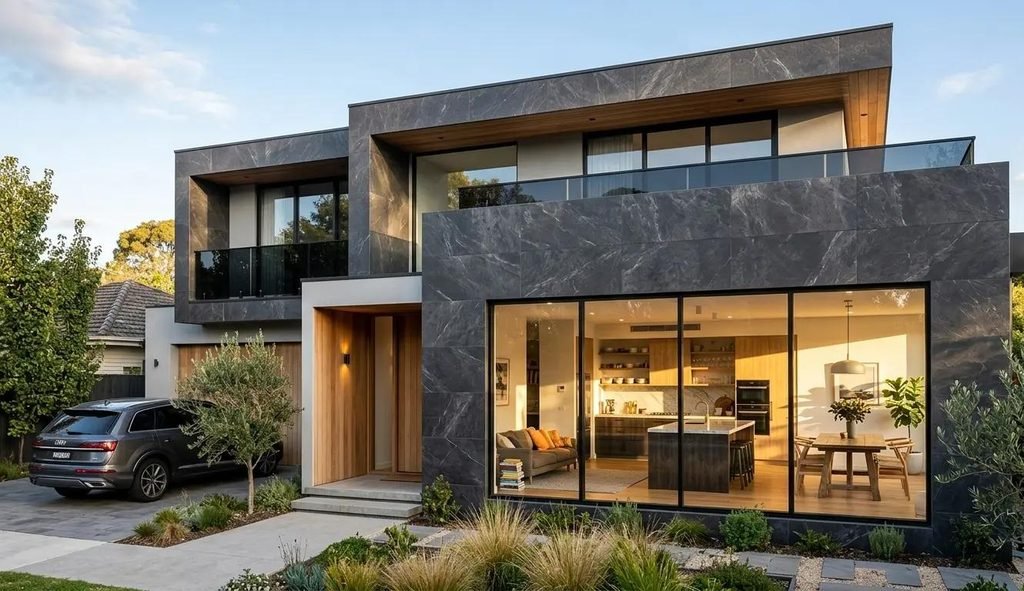
Granite is among the strongest natural stone options for exterior applications.
Its dense mineral structure makes many varieties suitable for demanding outdoor environments. Moreover, granite offers a broad selection of colours and surface finishes.
Popular granite colour categories include:
- Black granite for bold architectural features.
- White granite for bright contemporary elevations.
- Grey granite for minimalist exterior designs.
- Red granite for traditional architectural accents.
- Brown granite for warm natural aesthetics.
- Blue granite for distinctive feature walls.
Why consider granite for exterior elevation?
- Many varieties offer low water absorption.
- Granite provides excellent abrasion resistance.
- Different finishes support varied architectural styles.
- It offers strong performance under demanding conditions.
- It requires relatively straightforward routine cleaning.
However, granite varieties have different technical properties. Therefore, always request relevant test data before finalising your selection.
Marble for Exterior Elevation Design
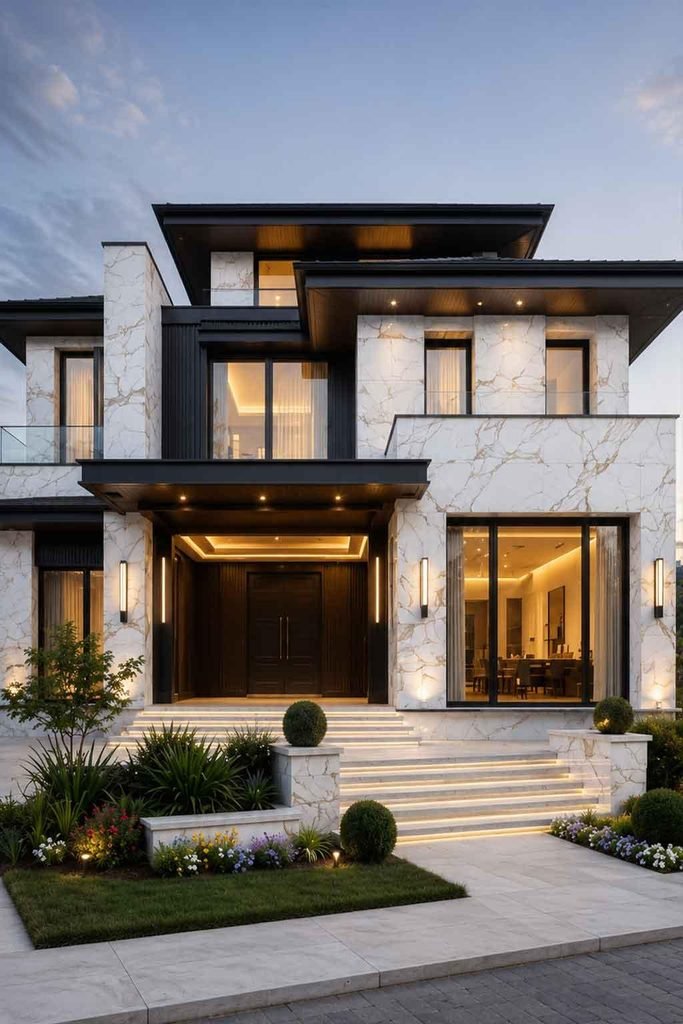
Marble is recognised for its elegant appearance and distinctive natural veining.
It can create sophisticated architectural features, particularly in luxury villas, hotels, and premium commercial buildings.
Popular marble colour choices include:
- White marble for elegant exterior surfaces.
- Beige marble for warm architectural designs.
- Grey marble for contemporary facades.
- Brown marble for rich natural textures.
- Green marble for distinctive decorative applications.
Marble requires additional consideration outdoors. Certain varieties can experience staining, surface deterioration, or dimensional changes under moisture and temperature cycles.
Therefore, do not select marble based on appearance alone.
Ask your supplier and project consultant to evaluate the stone’s suitability for the specific climate and facade system.
Explore the Italian Marble Collection at Shree Ram Stones for premium marble options.
H3: Marble vs Granite: Which Should You Choose?
| Selection factor | Granite | Marble |
|---|---|---|
| Appearance | Speckled, textured, varied | Veined, elegant, distinctive |
| Weather resistance | Generally excellent | Depends on variety |
| Water absorption | Often relatively low | Varies by variety |
| Maintenance | Usually moderate | Can require more attention |
| Design style | Modern and contemporary | Classic and luxurious |
| Exterior suitability | Many varieties suitable | Requires careful assessment |
Expert recommendation: For large exterior surfaces exposed to demanding weather, suitable granite varieties are often a practical starting point. For decorative marble features, select varieties with proven exterior performance.
Popular Exterior Elevation Design Ideas Using Natural Stone
The right stone can completely change a building’s architectural appearance. However, successful elevation design requires balancing colours, textures, lighting, and proportions.
Here are some practical design approaches.
1. Modern House Elevation with Grey Granite
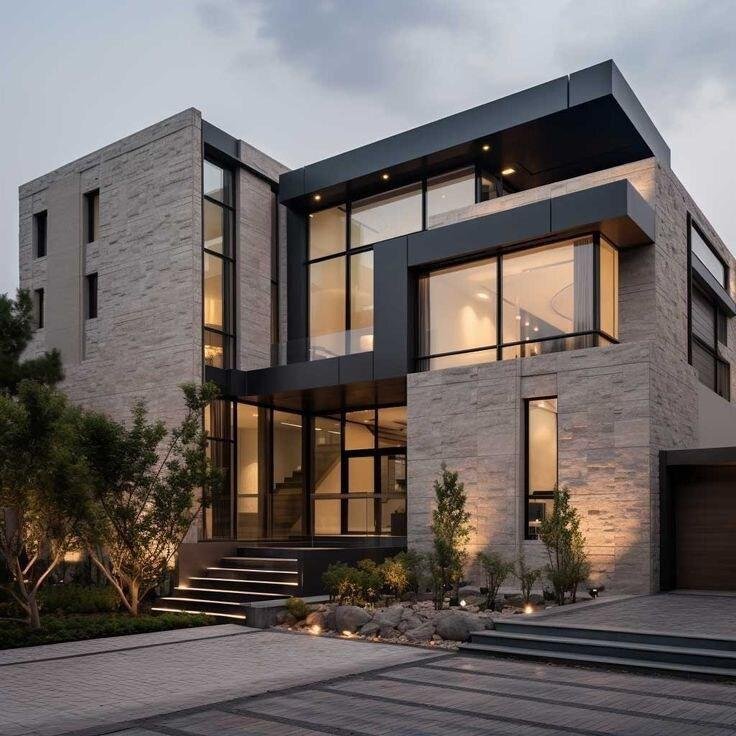
Grey granite works particularly well with contemporary architectural designs.
Its neutral appearance complements glass, concrete, metal, and wooden elements.
Consider using grey granite around:
- Main entrance walls.
- Balcony feature panels.
- Exterior columns.
- Garage entrances.
- Architectural projections.
Additionally, combine textured granite with smooth exterior finishes. This creates visual depth without making the building look excessively busy.
2. Luxury Villa Elevation with White Marble
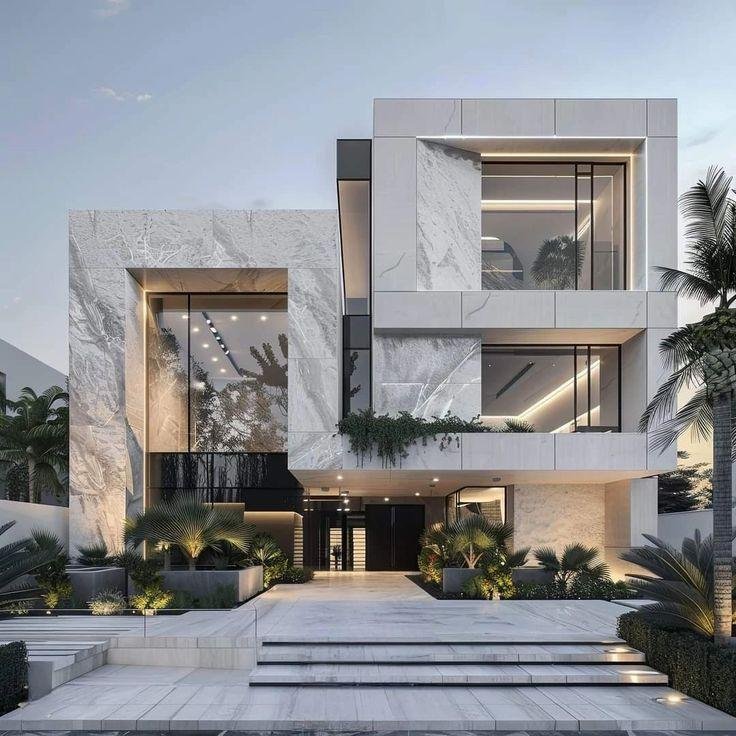
White marble can create an impressive luxury appearance.
Its natural veins introduce character, while lighter colours complement modern architectural elements.
Designers can use selected marble panels around entrance areas and sheltered architectural features.
However, exterior exposure requires careful material testing and detailing. Also, consider local pollution and cleaning requirements.
3. Black Granite for Contemporary Elevations
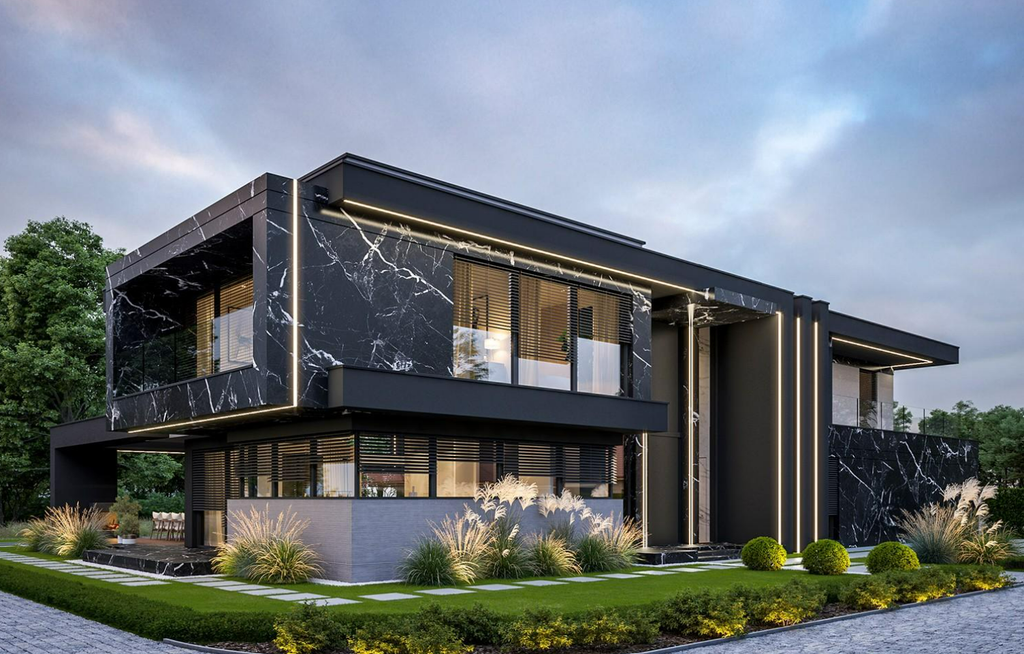
Black granite creates a strong visual statement.
It works particularly well with white walls, large windows, metallic finishes, and warm exterior lighting.
Furthermore, black stone can highlight architectural lines and entrance features.
Consider a textured or flamed finish where appropriate. However, dark surfaces can become hot under direct sunlight.
4. Beige Natural Stone for Traditional Indian Homes
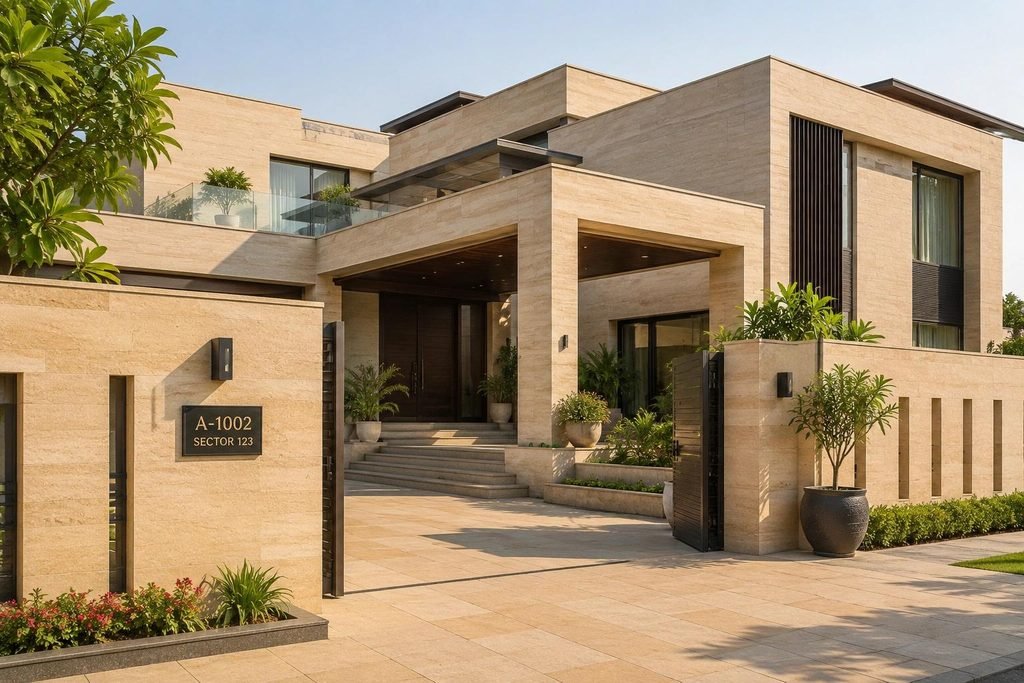
Beige stone creates a welcoming and elegant appearance.
It complements traditional Indian homes, luxury bungalows, and Mediterranean-inspired architecture.
Moreover, beige tones coordinate naturally with wooden doors, landscaped gardens, and warm lighting.
Use complementary shades to distinguish entrance columns, balcony walls, and exterior panels.
5. Mixed Stone Elevation Designs
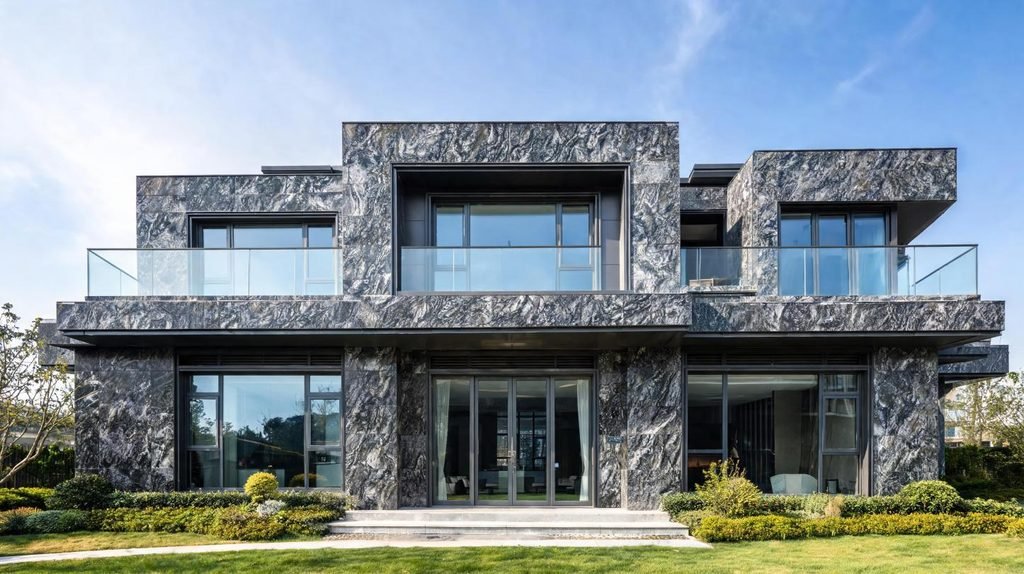
Combining two or three natural stone finishes can produce attractive results.
For example, designers can combine grey granite with white exterior surfaces. Similarly, beige stone can complement dark granite accents.
However, avoid excessive material combinations.
A balanced design generally uses one dominant material and one complementary feature stone.
How to Choose Weather-Resistant Natural Stone for Exterior Walls
Exterior elevation materials must withstand environmental conditions throughout the year.
Therefore, architects and buyers should evaluate technical characteristics before ordering stone.
1. Check Water Absorption and Porosity
Water absorption is an important consideration for exterior stone.
Highly absorbent materials may retain moisture and develop stains. In certain climates, repeated wetting and drying can also contribute to deterioration.
Ask for water absorption test results.
Additionally, evaluate the stone’s porosity and suitability for the intended installation system.
2. Evaluate Strength and Structural Properties
Stone cladding must support its own weight and withstand external forces.
Important considerations include:
- Compressive strength.
- Flexural strength.
- Density.
- Porosity.
- Thermal expansion.
- Dimensional stability.
For taller buildings, structural calculations become particularly important.
Consult a qualified structural engineer and facade specialist before finalising the installation.
3. Consider Sunlight and Temperature Changes
Indian buildings experience different temperature conditions across regions.
Dark stone can absorb considerable solar heat. Meanwhile, certain marble varieties may experience moisture-related dimensional changes.
Therefore, material selection should consider:
- Direct sunlight exposure.
- Local summer temperatures.
- Seasonal rainfall.
- Temperature fluctuations.
- Building orientation.
Furthermore, allow suitable movement joints within the facade design.
4. Select the Appropriate Surface Finish
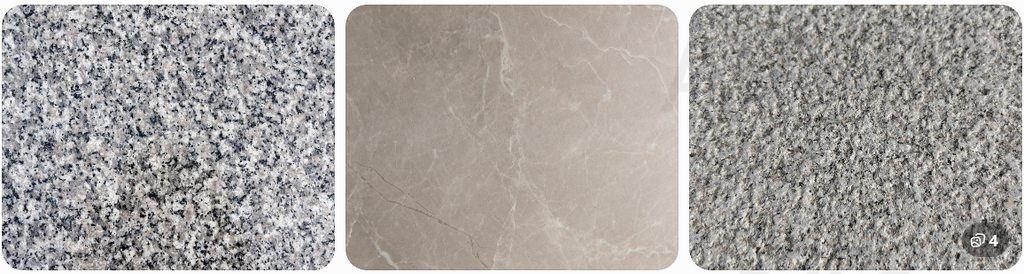
Stone finishes influence appearance, maintenance, and surface behaviour.
Common natural stone finishes include:
| Finish | Appearance | Typical consideration |
|---|---|---|
| Polished | Smooth and glossy | Shows reflections and surface marks |
| Honed | Smooth and matte | Subtle contemporary appearance |
| Flamed | Rough and textured | Useful for selected exterior applications |
| Leather | Soft textured surface | Adds natural visual depth |
| Sandblasted | Uniform textured appearance | Suitable for certain architectural designs |
The best finish depends on the stone, building design, cleaning requirements, and installation location.
5. Examine Slab Quality and Natural Variations
Never approve a large exterior order using one small sample alone.
Natural stone varies in colour, veins, mineral distribution, and texture.
Therefore, inspect multiple slabs before confirming the order.
For large projects, check the following:
- Overall colour consistency.
- Natural veins and patterns.
- Cracks and fissures.
- Surface repairs.
- Thickness variations.
- Available quantity.
- Batch consistency.
This step becomes especially important when several floors or large facade areas require matching material.
Exterior Stone Cladding: Installation Methods and Technical Considerations
Even premium natural stone can develop problems when installers use unsuitable methods.
Therefore, installation planning deserves the same attention as material selection.
1. Mechanically Fixed Stone Cladding
Mechanical fixing systems use specially designed anchors and supporting structures.
They can provide controlled support for exterior stone panels.
These systems are particularly relevant for taller buildings and larger facade installations.
However, engineers must calculate anchor positions, panel thickness, loads, and supporting structure requirements.
2. Adhesive-Based Stone Installation
Some exterior stone applications use suitable adhesive systems.
However, installers must check compatibility with the stone and substrate.
Moisture sensitivity, panel weight, exposure conditions, and installation height all influence the selection.
Never assume that an adhesive suitable for indoor marble will automatically suit exterior cladding.
3. Waterproofing and Drainage
Water management plays an important role in facade durability.
Poor drainage can allow water to accumulate behind stone panels.
Consequently, facade designs should address:
- Suitable waterproofing systems.
- Proper drainage provisions.
- Flashing details.
- Joint sealing.
- Moisture management.
- Movement accommodation.
These details help protect the building envelope and reduce moisture-related problems.
4. Professional Installation and Safety
Stone panels can become dangerous if installers use inadequate support systems.
Therefore, large facade installations require qualified contractors and appropriate safety procedures.
For multi-storey projects, do not rely on ordinary tile-installation practices.
A qualified facade consultant should approve the complete system before installation.
Natural Stone for Exterior Elevation in Indian Weather Conditions
India has diverse climatic conditions. Consequently, one stone specification cannot suit every location.
A building in Rajasthan faces different environmental conditions from one in Kerala or a coastal city.
1. Rajasthan and North India
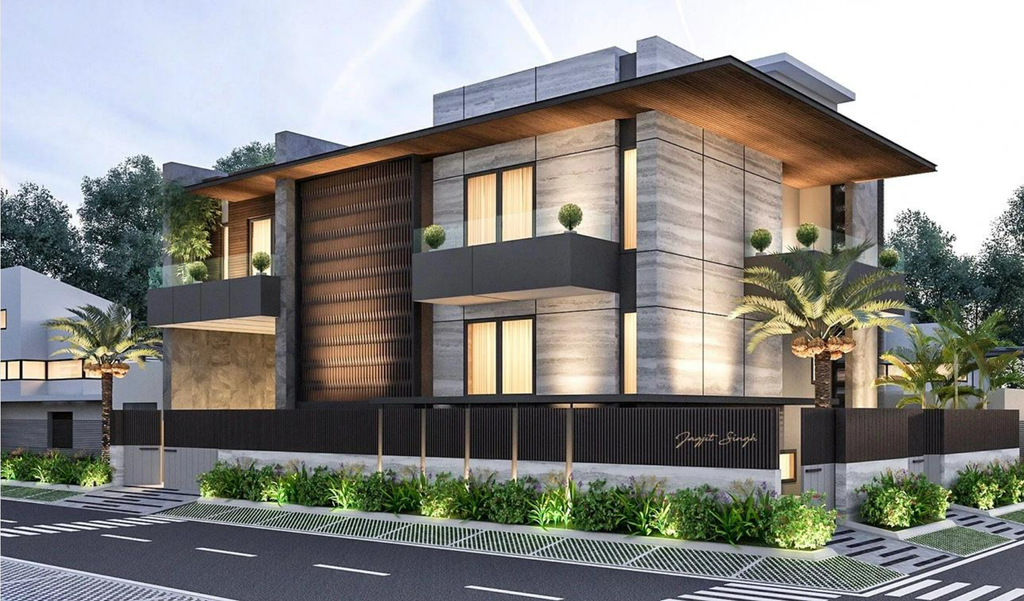
Rajasthan experiences hot summers, strong sunlight, dust, and seasonal rainfall.
For these conditions, buyers should prioritise:
- Stones with suitable thermal stability.
- Low or controlled water absorption.
- Durable surface finishes.
- Properly designed facade joints.
- Easy-to-maintain colours and textures.
Granite can be an excellent option when the selected variety meets project requirements.
2. Coastal Areas
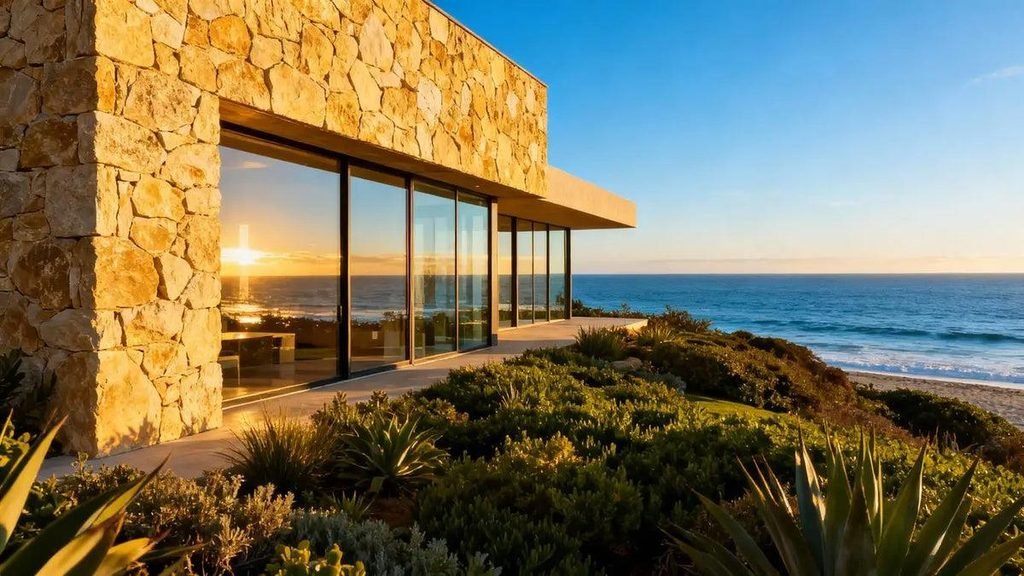
Coastal buildings face humidity, rainfall, and airborne salts.
Therefore, stone selection must consider moisture exposure and potential salt-related deterioration.
Additionally, metal anchors and fixing components require suitable corrosion resistance.
Regular inspection also helps maintain exterior performance.
3. High-Rainfall Regions
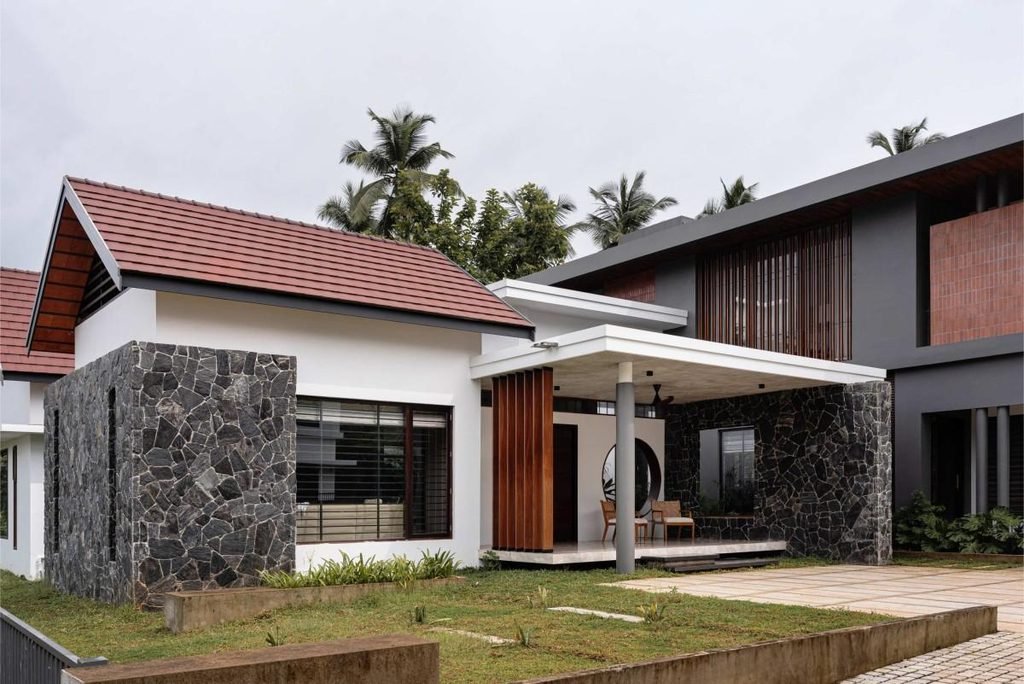
Buildings in high-rainfall regions need careful water management.
Choose suitable stone varieties and finishes after reviewing absorption and durability data.
Furthermore, drainage and waterproofing details should prevent moisture accumulation behind facade panels.
4. Urban and Commercial Buildings
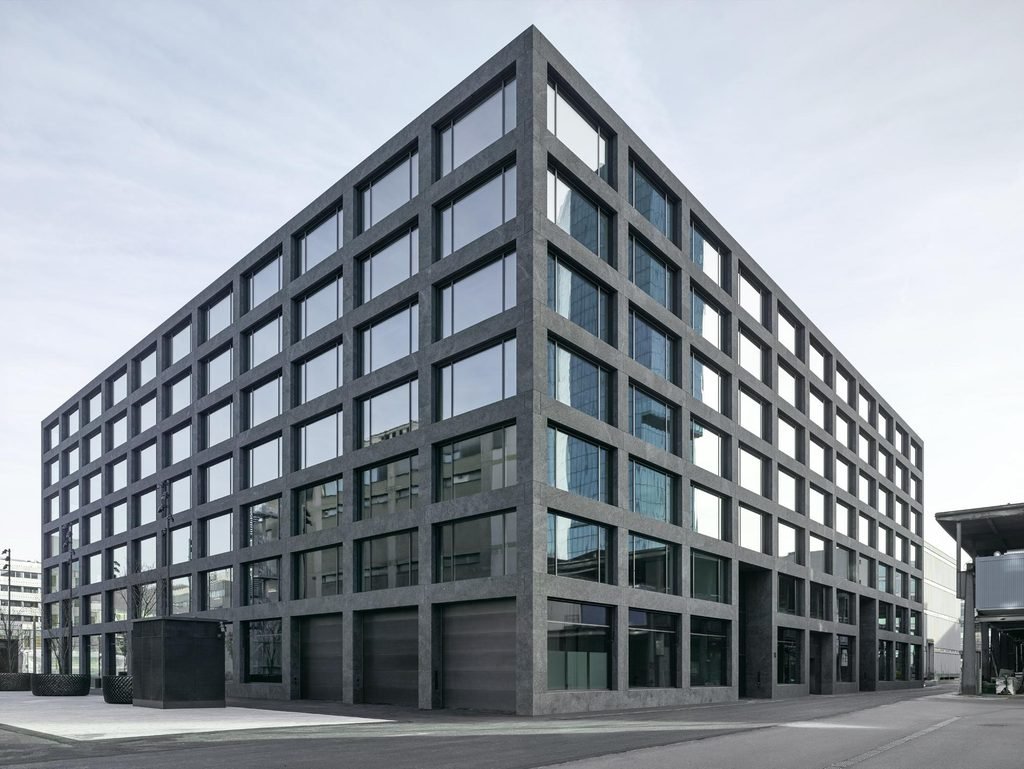
Urban buildings experience dust, vehicle pollution, and frequent environmental exposure.
Grey and darker granite varieties can work well in selected applications.
However, cleaning frequency and surface finish should influence the final choice.
Best Natural Stone Colours for Modern Building Elevation
Colour selection influences the entire architectural appearance.
Therefore, coordinate stone colours with windows, doors, exterior paint, landscaping, and lighting.
White Natural Stone
White stone creates a clean, premium appearance.
It works well with modern villas, contemporary houses, and luxury entrances.
However, lighter surfaces may show dirt and environmental stains more clearly.
Grey Natural Stone
Grey provides a balanced and versatile architectural finish.
It complements concrete, glass, aluminium, and wooden elements.
Moreover, grey granite suits minimalist building designs.
Black Natural Stone
Black granite creates dramatic contrast.
It works particularly well around entrance walls, columns, and selected feature areas.
However, consider heat absorption and the surrounding architectural colours.
Beige and Brown Natural Stone
Beige and brown introduce warmth.
These shades suit traditional residences, villas, resorts, and hospitality projects.
Additionally, they complement landscaping and natural wooden finishes.
Common Mistakes to Avoid When Buying Exterior Elevation Stone
Many exterior projects face unnecessary maintenance or installation problems because buyers focus only on appearance.
Avoid these common mistakes.
Mistake 1. Selecting Stone Only by Colour
A beautiful slab does not automatically qualify for exterior use.
Always check its technical properties and suitability for your climate.
Mistake 2. Ignoring Water Absorption
Moisture can affect certain natural stones.
Therefore, request relevant test reports before ordering.
Mistake 3. Choosing the Wrong Thickness
Panel thickness depends on stone properties, panel dimensions, support spacing, and loading conditions.
A qualified engineer must approve the specification.
Mistake 4. Ignoring Installation Costs
The total project budget includes more than the stone purchase price.
Consider transportation, cutting, wastage, fixing systems, labour, scaffolding, and maintenance.
Mistake 5. Ordering Without Inspecting the Full Lot
Natural stone contains natural variations.
Consequently, inspect available slabs and approve the intended material range before bulk purchasing.
Mistake 6. Ignoring Long-Term Maintenance
Exterior stone requires appropriate cleaning and periodic inspection.
Some varieties also need suitable protective treatments.
Follow recommendations from the stone supplier and treatment manufacturer.
How to Maintain Natural Stone Exterior Elevation
Proper maintenance helps preserve the appearance and performance of natural stone.
Although granite and marble offer long-lasting architectural value, outdoor exposure can gradually affect their surfaces.
Follow these maintenance practices.
1. Clean Exterior Stone Regularly
Remove accumulated dust, dirt, and pollution using suitable cleaning methods.
Use stone-compatible cleaning products. Avoid harsh chemicals unless the manufacturer approves them.
2. Inspect Joints and Fixing Systems
Periodically inspect joints, sealants, anchors, and visible facade panels.
Additionally, address loose panels, cracks, and water leakage immediately.
3. Apply Suitable Stone Protection
Some natural stones benefit from appropriate water-repellent or stain-resistant treatments.
However, protective products must match the stone’s composition and finish.
Always test treatments on a small area first.
4. Avoid Improper Pressure Washing
Excessive water pressure can damage joints and certain stone surfaces.
Therefore, use professional cleaning methods for large exterior installations.
5. Schedule Professional Inspections
Large buildings require periodic facade inspections.
A qualified specialist can identify early signs of deterioration, loose panels, and drainage problems.
Why Choose Shree Ram Stones for Premium Natural Stone Selection?
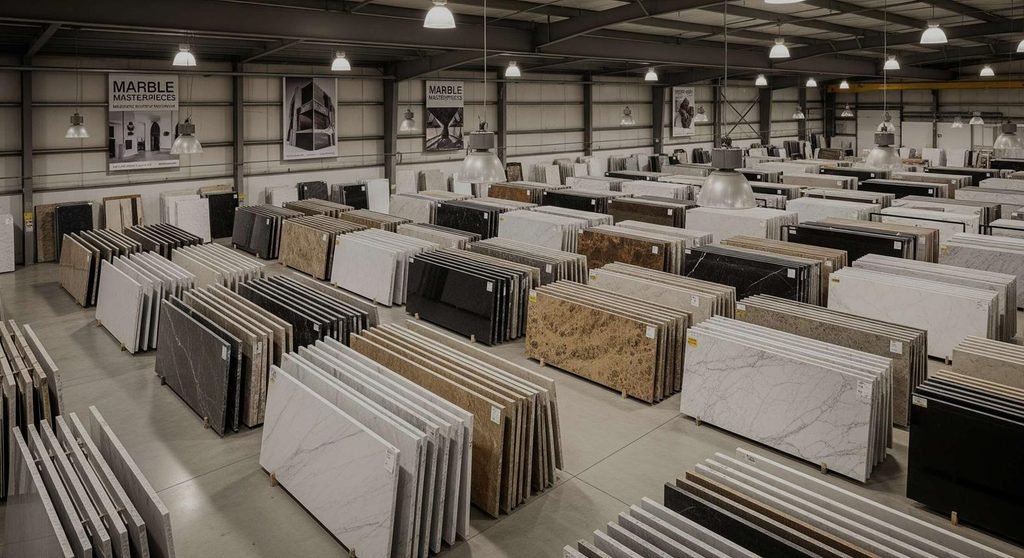
Selecting the right natural stone supplier is an important part of any construction project.
Shree Ram Stones brings experience in the natural stone industry since 1987.
Based in Kishangarh, Rajasthan, the company serves homeowners, architects, builders, contractors, wholesalers, and international buyers.
We specialise in marble, granite, onyx, quartz, porcelain, and other natural stone collections.
1. Extensive Natural Stone Collection
Our collection includes several categories for different architectural requirements.
Explore:
- Italian Marble Collection
- Imported Marble Collection
- Granite and Natural Stone Products
- Complete Shree Ram Stones Collection
2. Factory-Direct Supply
We focus on providing direct factory supply and competitive pricing.
Our team assists buyers with product selection, quantity planning, and project requirements.
This approach helps bulk buyers make informed purchasing decisions.
3. Support for Architects and Large Projects
Every architectural project has different stone requirements.
Our team helps customers explore available colours, slab patterns, finishes, and dimensions.
Furthermore, we assist with matching material selection to project requirements.
4. Domestic and International Supply
We support customers across India and international markets.
Our services include material selection, quantity coordination, and container loading assistance.
Contact our team to discuss availability, specifications, and delivery requirements.
Frequently Asked Questions About Natural Stone for Exterior Elevation
1. Which natural stone is best for exterior elevation?
Granite is often an excellent choice for exterior elevation because many varieties offer strong weather resistance and durability.
However, the final selection depends on the stone’s technical properties, local climate, and installation method.
2. Is marble suitable for exterior wall cladding?
Yes, certain marble varieties can suit exterior applications.
However, evaluate moisture sensitivity, thermal stability, porosity, and historical performance before selection.
Not every marble is suitable for outdoor exposure.
3. Which granite colour is best for modern house elevation?
Grey, black, and white granite are popular choices.
Grey provides a contemporary appearance, while black creates dramatic contrast. White granite offers a brighter architectural finish.
Choose according to your building’s design and surroundings.
4. Does natural stone exterior cladding require maintenance?
Yes. Natural stone requires periodic cleaning and inspection.
Depending on the material, you may also need protective treatments and joint maintenance.
5. Is granite better than marble for exterior elevation?
Granite generally offers better resistance to weathering and abrasion.
However, selected marble varieties can deliver beautiful exterior finishes when properly specified and installed.
6. What thickness is suitable for exterior stone cladding?
There is no universal thickness for every exterior project.
The correct thickness depends on stone strength, panel dimensions, fixing arrangements, wind loads, and installation height.
A qualified facade engineer should approve the final specification.
7. Can I combine marble and granite in one building elevation?
Absolutely. Combining marble and granite can create attractive architectural contrasts.
For example, use granite for larger exterior sections and carefully selected marble for sheltered decorative features.
However, ensure both materials have suitable exterior performance.
8. Where can I buy premium marble and granite in India?
Kishangarh, Rajasthan, is an important natural stone trading and processing centre.
Shree Ram Stones offers marble, granite, and other premium stone collections for residential and commercial projects.
Visit www.shreeramstones.com to explore available products.
Final Thoughts – Choose the Right Natural Stone for Your Building’s Exterior
Exterior elevation is more than an architectural finishing element. It represents your building’s identity, design philosophy, and attention to quality.
Therefore, choose natural stone based on technical performance, aesthetics, climate, and installation requirements.
Granite offers an excellent starting point for durable exterior applications. Meanwhile, carefully selected marble can create distinctive luxury features.
Additionally, consider slab consistency, suitable finishes, waterproofing, fixing systems, and professional installation.
Most importantly, work with an experienced stone supplier who understands your project’s requirements.
Shree Ram Stones helps you explore premium natural stone collections with professional selection support and direct factory supply.
Make your next architectural project more distinctive with the right natural stone.
Contact Shree Ram Stones
Shree Ram Stones – Since 1987
Premium Marble, Granite, Onyx and Natural Stone Manufacturer, Supplier and Exporter.
Makrana Road, RIICO Industrial Area, Kishangarh, Khatoli, Rajasthan 305801, India
+91 92521 01111
ceo@shreeramexpo.in
www.shreeramstones.com